
Walk a Marietta Street by Address
A useful Marietta street directory begins with geography, not a list of names. Postal Marietta reaches beyond the incorporated city, so first test the address in the city property tool. A city tax district, city-map shading, or a Marietta City Schools assignment is stronger evidence of city jurisdiction than the mailing label or utility provider. Once jurisdiction is clear, the county parcel systems can place each lot in order and supply the stable identifiers needed for later searches.
Follow one repeatable chain for each property. It separates owners from people who may have lived at the address and keeps every conclusion tied to a dated public source.
- Confirm the municipal boundary with the Marietta property tool, then normalize the house number and street name.
- Search the Cobb assessor and save the parcel ID, situs address, owner, mailing address, legal description, and deed reference.
- Open county GIS, follow the mapped lots in geographic order, and return to each parcel card instead of relying on map labels.
- Use the current deed reference and owner in Landmark or GSCCCA, matching the legal description before moving backward through sellers.
- Add lawful voter evidence, permits, and a dated householder directory only when those sources fit the question.
That flow turns an address into evidence without pretending that a parcel card is a resident roster. For a single named person rather than a whole street, the Marietta resident lookup has the narrower verification workflow.
Prove a Marietta Street Is Inside
The city and the post office answer different questions. The official Marietta GIS guidance warns that a Marietta postal address, and even Marietta Power and Water service, does not establish that a parcel is in the city. The Marietta city property tool autocompletes an address, reports the parcel and city-school assignments, and uses city GIS data updated nightly. A result outside the city should redirect a permit or records request to Cobb County.
Annexation files show why the line can be complex. An owner request needs a survey, county tax plats, a legal description, and other property material. Postal wording may remain familiar while legal jurisdiction changes. The street directory therefore records both the retrieval date and the government layer used. It never infers city status from the word “Marietta” alone.
City GIS also maintains address authority and publishes open geographic applications. Its office can help with an assigned or changed address, while the county systems remain the key source for parcel ownership. Those roles are related but not interchangeable.
Enter Marietta Street Text Correctly
Cobb’s quick address form is strict. The Cobb GIS Property Search wants the house number and street only. Apartment numbers, city, state, and ZIP must be left out. If the first attempt fails, test a normalized directional or street suffix, while preserving the original spelling in research notes.
| Portal field | Input type | Needed | Format rule |
|---|---|---|---|
| House Number and Street | Text | Yes | Use a form such as 100 Cherokee Street; omit unit, city, state, and ZIP |
| Search Property Records | Button | Yes | Opens the matching public property information |
The captured search screen shows how narrow the input is. This small rule prevents many false “no record” results and makes a street-by-street review more consistent.
View the official Cobb GIS address search before comparing the form with the screenshot.
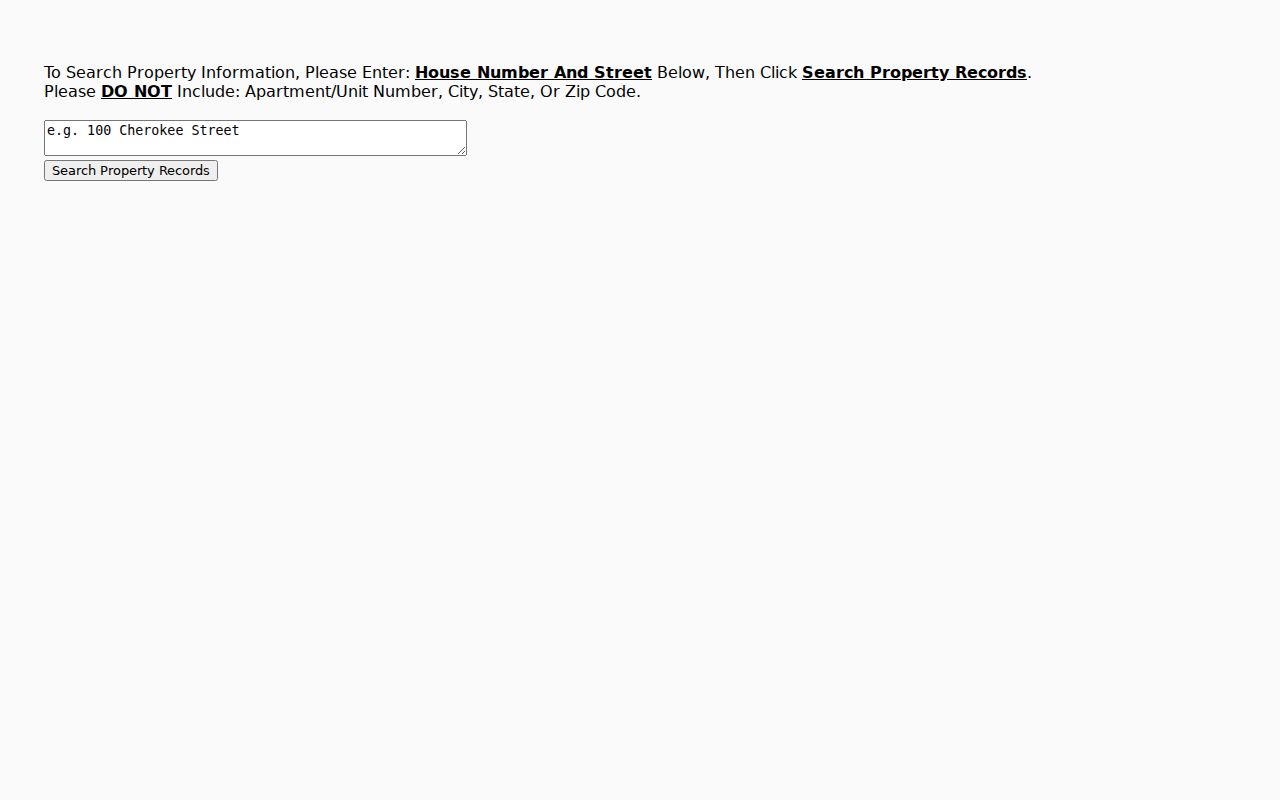
The image confirms that Cobb expects one combined house-number-and-street field, not a full mailing address.
Note: Keep the literal indexed spelling in the notes even when a normalized variant produces the match.
Map Marietta Parcels in Street Order
A text result is only the start. The Cobb County parcel map preserves the physical order of lots, including side streets and irregular boundaries that an alphabetical result list can hide. Search the target, retain its parcel ID, zoom until the lot lines are clear, and open the neighboring parcel records one at a time. The parcel ID is the best bridge back to tax and deed systems.
Open the county ArcGIS map collection to see the interface represented below.
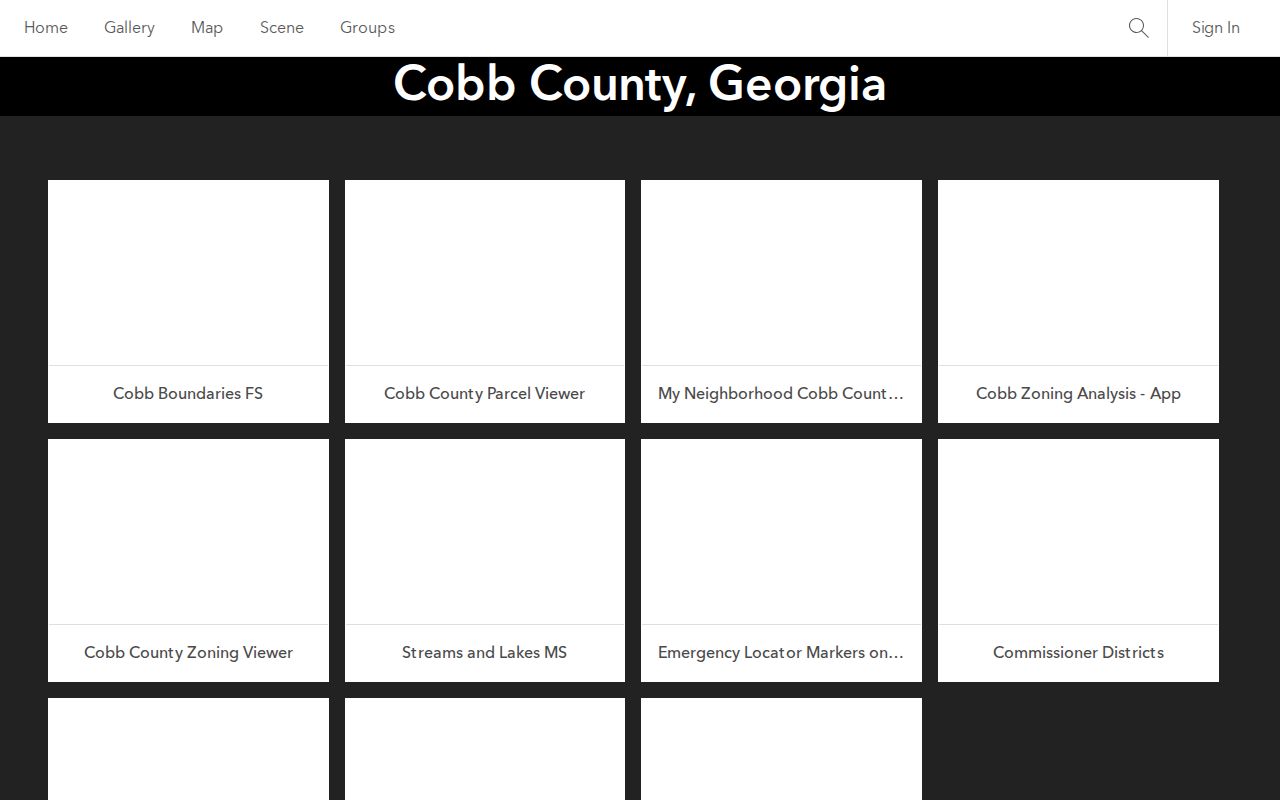
The mapped polygons organize a Marietta street directory geographically, but each owner statement should still come from the linked parcel card.
Marietta maintains its own GIS services and address data for city functions. Its catalog also exposes historical aerial layers labeled 1961, 1974, 1983, and 1988. Those layers can date buildout or land-use change when paired with permits. They cannot name occupants.
Review Marietta GIS services alongside the captured city page.
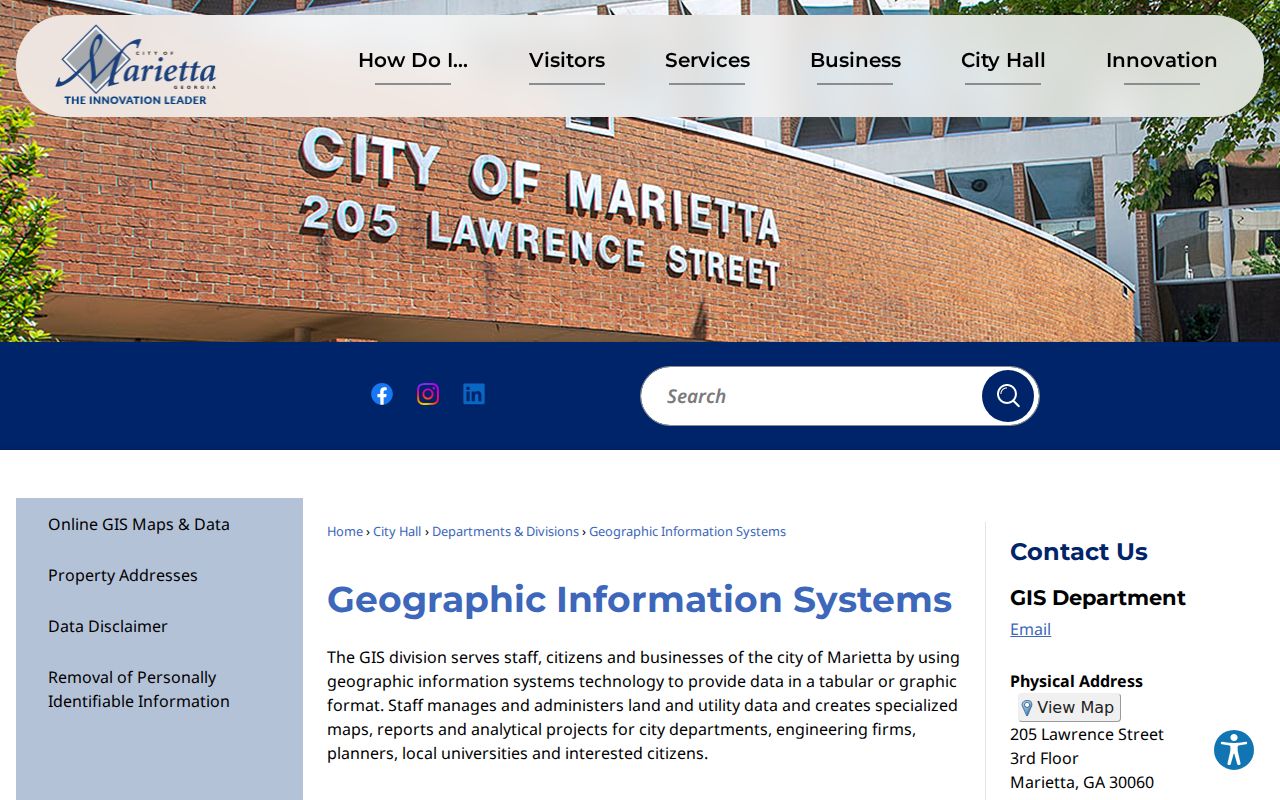
The city service is the right companion when county parcel evidence must be checked against Marietta’s boundary and address authority.
Marietta Street Records and Limits
No single roll answers who lives at every address. Each record in the Marietta street directory proves a narrower fact, and access may be online, at a counter, by mail, or through a targeted open-records request.
| Address source | Office or keeper | Evidence shown | Access route |
|---|---|---|---|
| Parcel and tax roll | Cobb Board of Tax Assessors | Owner, situs, mailing address, parcel, values, exemptions, deed references | Free web search; counter, phone, or existing-data request |
| GIS parcel map | Cobb GIS and Marietta GIS | Boundaries, roads, adjoining parcels, city jurisdiction | Free viewers, open data, or office help |
| Deeds, liens, and plats | Cobb Superior Court Clerk | Recorded parties, transfers, legal descriptions, book and page | Landmark, GSCCCA, deed room, or mail copies |
| Voter information | Georgia Secretary of State | Individual registration or regulated purchased-file fields | Self-lookup or statutory list order |
| Permits and board files | Marietta or Cobb, based on jurisdiction | Project address, date, applicant, contractor, alteration | SagesGov, department support, or records request |
| Householder directory | Switzer Library Georgia Room and DLG | Listed adult or subscriber at an address in a publication year | In person, staff help, or selected free scans |
The assessor’s situs address means the physical property address. Its mailing address is where the tax notice goes. A homestead entry can support an owner-occupancy inference for the qualifying period, but it does not name the rest of a household. Bulk digest data is dated and should not be treated as a live occupancy list.
- Parcel
- A mapped unit of land with its own county identifier.
- Situs address
- The physical location of the parcel, distinct from the tax-mailing address.
- Plat
- A recorded survey drawing that identifies lots, blocks, boundaries, and subdivision details.
- Criss-cross directory
- A historical directory arranged by street and house number rather than only by surname.
Link Marietta Addresses to Deeds
Deeds are indexed by people and legal property data, not as a perfect street list. Start with the current assessor deed reference. The Cobb Clerk’s local Landmark search offers Name, Document, Book/Page, Parcel ID, Record Date Range, Instrument Number, Legal, and Quick Search modes. The disclaimer advises testing spelling variants, and the original record at the Real Estate Office controls.
Open Cobb Landmark to compare its search entry with the saved image.
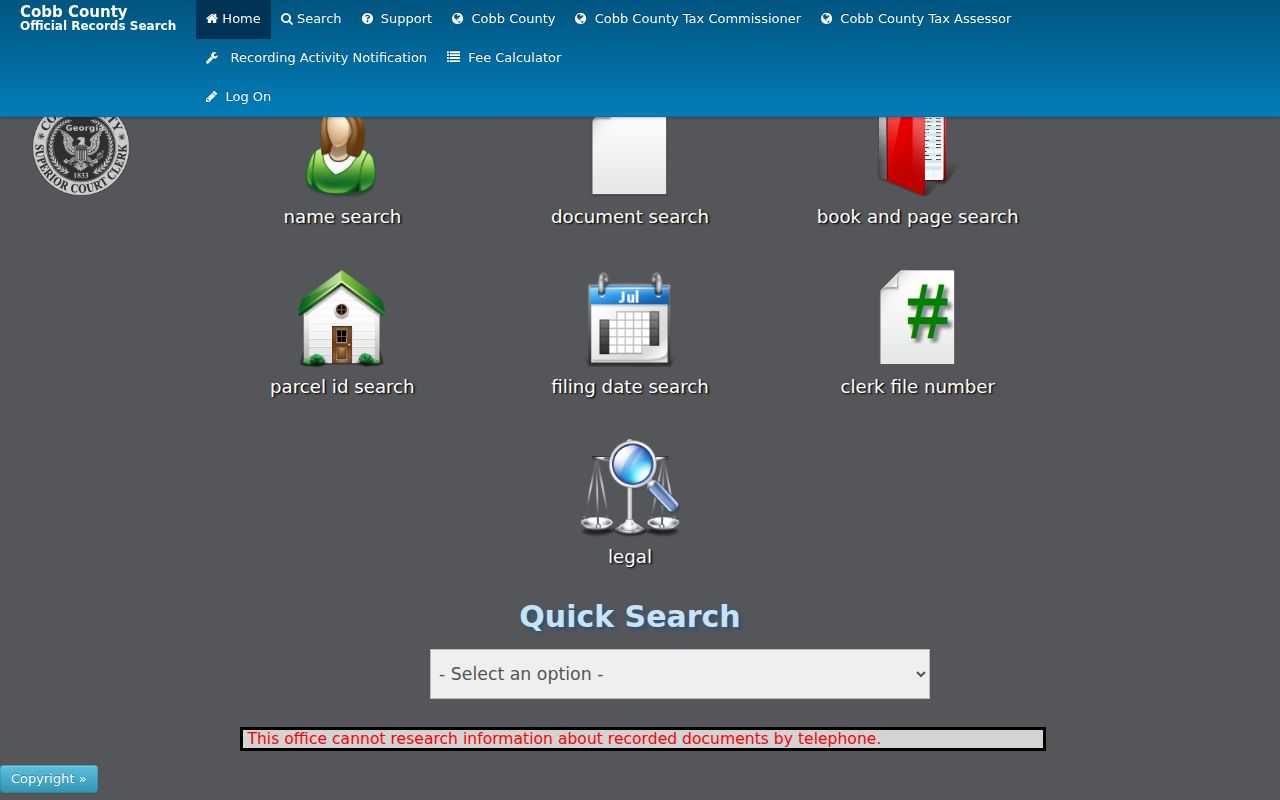
The mode choices make parcel ID, legal description, book/page, and party-name searches practical when street wording changes.
The statewide GSCCCA real-estate index adds searches by name, book/page, and property fields such as county, subdivision, unit, block, and lot. Address searching through PT-61 is a premium function. Account pricing published as of July 1, 2025 was $14.95 monthly for regular access and $29.95 for premium access, so current charges and image terms should be checked before use.
Visit the GSCCCA real-estate search before using the interface shown below.
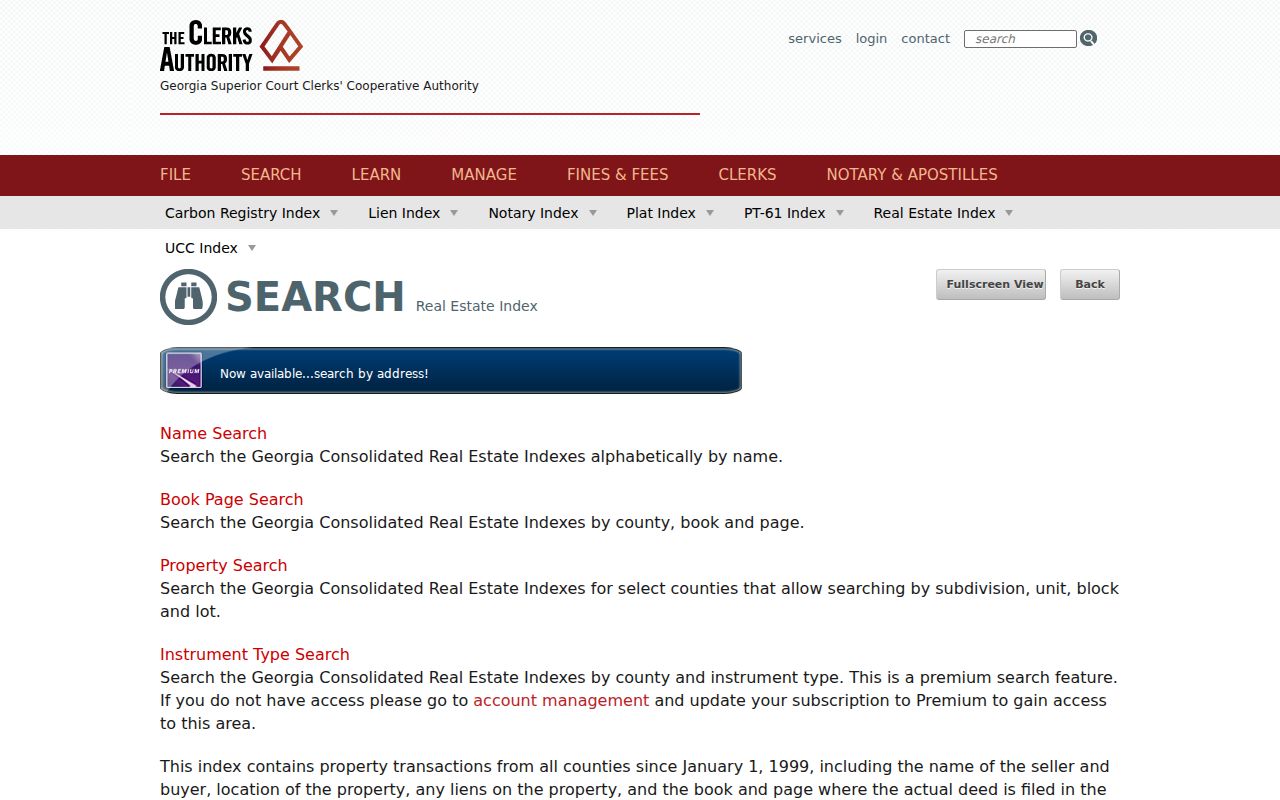
The statewide screen complements Landmark, but older records may still require free deed-room inspection, mailed copies, the Georgia Archives, or FamilySearch. Clerk staff can explain access by phone but does not research documents for callers.
Marietta Permits Follow the Address
Permits add a dated event to the street record. Marietta names building, mechanical, electrical, plumbing, plan-review, engineering, and occupancy-change permits. A file may identify an owner, applicant, contractor, work address, and project type. It dates the work, not a person’s move-in or continuous residence.
Marietta permit guidance gives a useful insider rule when an address will not verify: enter the street number and only the first four letters of the street, omit prefix, suffix, and unit, then choose and confirm the dropdown result. All current permit submissions use SagesGov. Building Inspection help and a city open-records request remain fallback channels for existing files. A postal-Marietta site outside city limits belongs with Cobb.
Read the city permit instructions next to the captured guidance.
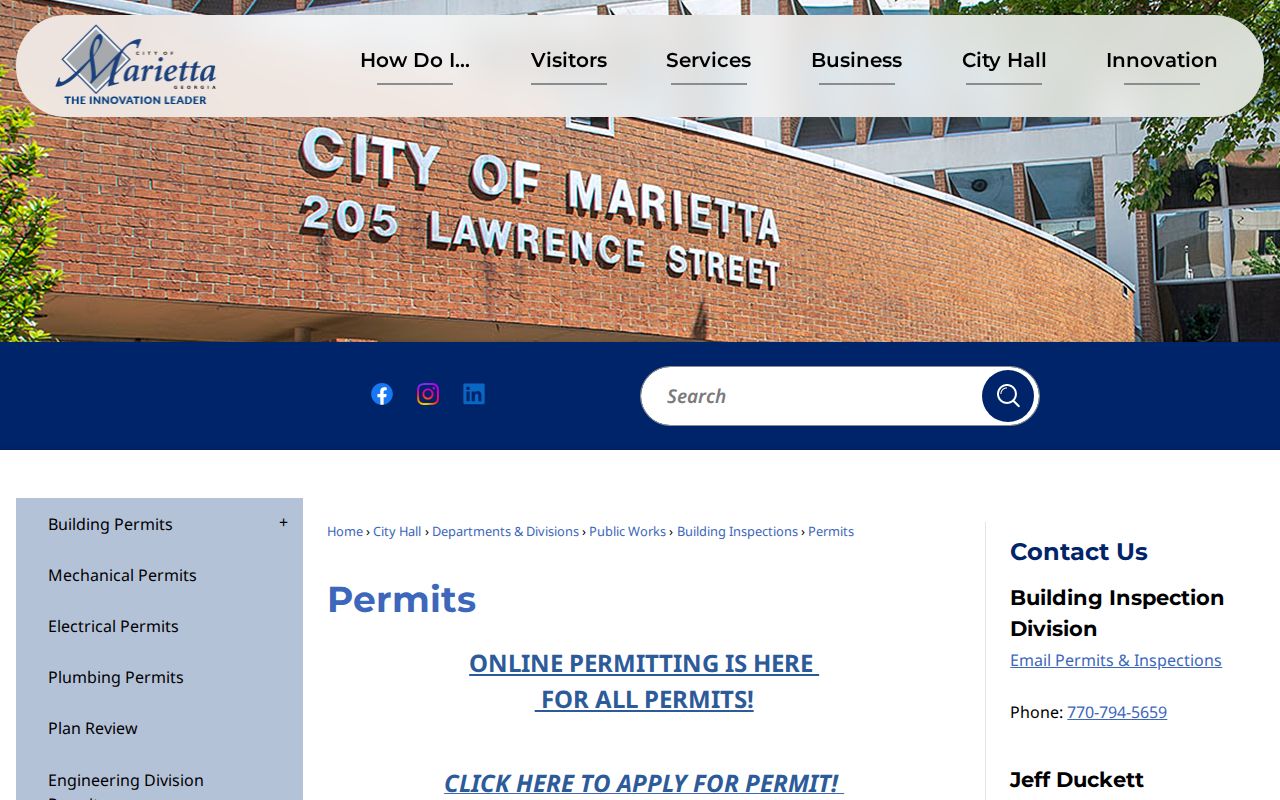
The screen supports address-based project research while the city-limit check decides which agency should hold the file.
Historic Marietta Street Directory Pages
The 1956 Nelsons’ volume includes a Householders Guide arranged by street and address, alongside its alphabetical residents section. The publisher said it listed people age 16 and older. Entries may include a spouse in parentheses, a number for children under 16, an occupation or employer, and an ownership symbol that OCR can lose. That stated rule still does not guarantee that every resident appeared.
Use the street section to connect a dated address with a listed adult, then inspect the image and the abbreviation key. The Georgia Room holds Marietta-related directory runs from 1883 through 1987 with gaps and changing community groupings. The 1956 and 1975 examples are freely digitized through the Digital Library of Georgia. Full collection years and reading methods belong on the Marietta city directories page.
Older directory spelling can diverge from current addressing. Preserve the printed street text, compare legal descriptions and plats, and avoid forcing a match based on a familiar surname alone.
Note: OCR can scramble line order and symbols, so verify every name and house number on the scanned page.
Voter Evidence Along Marietta Streets
Georgia’s My Voter Page is an individual verification tool, not a public browse-by-street directory. It asks for a first initial, last name, county, and date of birth. A match can return registration status, registered residence, precinct, polling place, districts, and ballot information. It never reveals ballot choices, and Georgia does not register voters by party.
Whole-street analysis uses the state’s regulated purchased-file process. Available fields can include a structured residence address, registration status, precinct descriptions, districts, dates, birth year, race, gender, and last primary ballot type. The file excludes phone numbers, full birth dates, Social Security numbers, and driver-license numbers. O.C.G.A. §21-2-225 governs public elector information, while §21-2-601 bars commercial use. VoteSafe can shield the home address of a qualifying protected voter.
Absence from voter data cannot prove vacancy or a move. A person may be unregistered, inactive, protected, too young, or recorded elsewhere. The street directory should label voter evidence for what it is: registration at a date, not a full adult roll.
Limits of Marietta Street Directory Evidence
An owner name is not an occupant list. A corporation, trust, estate, or person living elsewhere may hold title. A tax mailing address may point away from the parcel. A permit names parties to a project, a deed documents a transfer, and a voter file reflects registration. None supplies a complete household. Private utility, delivery, motor-vehicle, minor, and unlisted-occupant data do not become public merely because a street search is possible.
The strongest result states the source, retrieval date, and limits. Confirm an ownership claim through the assessor and deed. Confirm an old listed resident with the directory image and another dated record. If an online index fails, use the assessor counter, GIS staff, deed room, mailed-copy process, Georgia Room, archives, or a narrow Georgia Open Records Act request to the correct custodian.
Lawful use. Use Marietta address records for lawful personal research. Never use a street directory to stalk, harass, intimidate, or harm anyone.
A commercial people-finder may combine stale or mismatched data without showing its source date. Official records are narrower, but their custodian, field definitions, and retrieval paths can be checked. That traceability is the sounder basis for genealogy, house history, civic research, or verifying a property seller.